Serengeti
Northern Circuit (Serengeti & Ngorongoro)
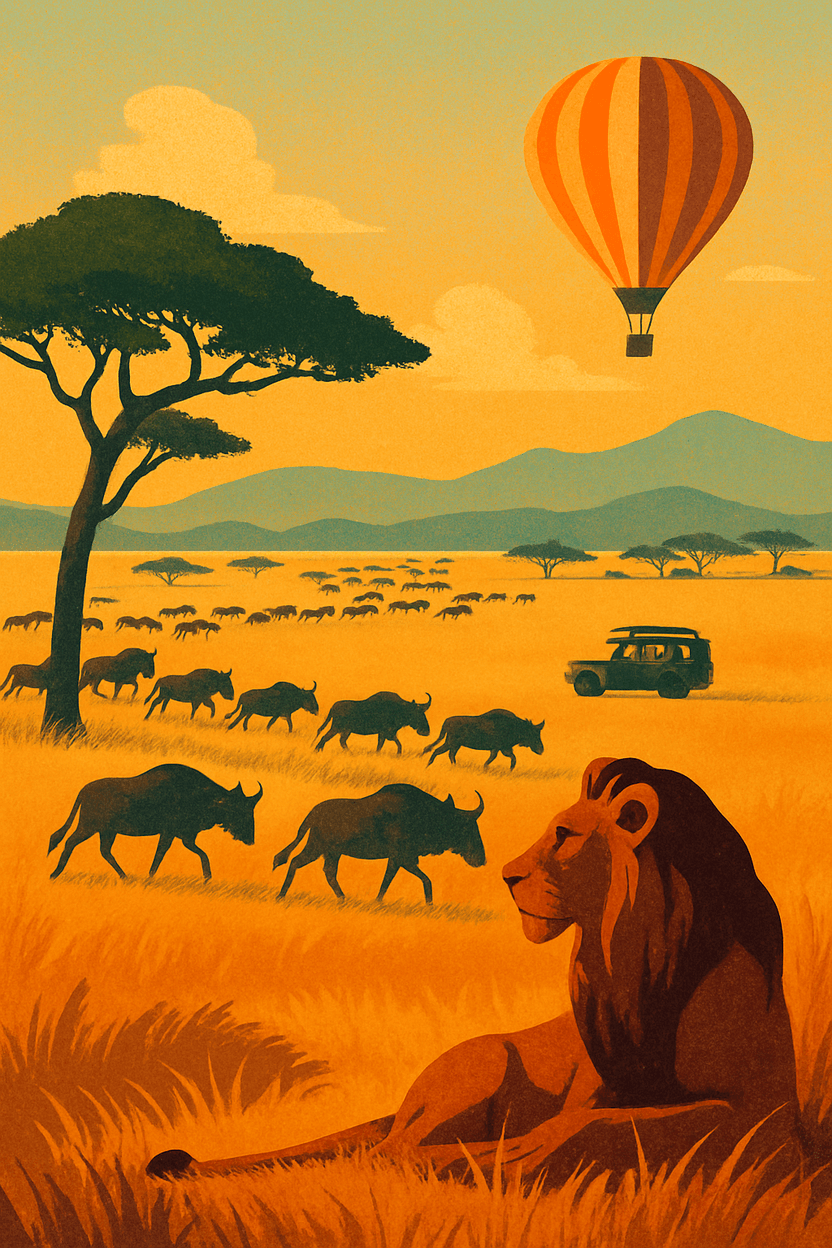
The classic African safari — endless plains, big-cat drama and the million-strong wildebeest Great Migration, whose river crossings (Jul–Sept) and calving (Jan–Feb) set the calendar; the long rains of April–May are the one stretch to avoid.
The full sheet
lodging $$$ · airfare $$$- Great Migration river crossings late Jul–Sept/Oct (northern Serengeti, Mara River)the marquee event — dramatic Mara River crossings; northern camps book out 6–12 months ahead at peak prices
- Calving season late Jan–Feb (southern Serengeti/Ndutu)~8,000 wildebeest born per day plus intense predator action — the other peak window (green, and less crowded than Jul–Sept)
- Long rains March–May (April wettest)hazard/low window — some seasonal/mobile camps close, black-cotton roads turn to mud and herds are hard to reach; cheapest but riskiest weather
- Christmas–New Year & July–August peak late Dec; July–Augustholiday + dry-season apex; lodges at top rates — book 6–14 months ahead
Best overall
June–October (dry season): easiest game-viewing (thin bush, animals at waterholes) and the Mara River crossings in the north; late Jan–Feb for the calving in the south. Avoid April–May (long rains).
Shoulder
June, November and March (short/starting rains, fewer vehicles, green landscapes)
Peak
Jul–Oct (dry season + river crossings; Jul–Sept busiest) and Dec–Feb (calving + holidays)
Weather
Equatorial highland savanna (~1,500 m / 5,000 ft), so mild — highs ~79–85°F year-round with cool mornings/nights (bring layers for dawn game drives). Dry season Jun–Oct; long rains Mar–May (April wettest); short rains Nov–Dec. Highs 79–85°F. Rain: high Mar–May (long rains); lighter short rains Nov–Dec; dry Jun–Oct.
Getting there & entry
JRO (Kilimanjaro International) — 1-stop (no US nonstop) + bush flight (No US nonstop to JRO. Connect via Amsterdam (KLM), Doha (Qatar), Addis Ababa (Ethiopian), Istanbul (Turkish) or Dubai/Nairobi — ~18–24h+ from the US (up to 36h with poor connections). From JRO, reach the Serengeti by light-aircraft bush flight (~1–2h, ~$250–400 pp) or a long road transfer via Arusha (7–9h).)
Transfer: JRO→Serengeti airstrip ~1.5–2h by light aircraft (or 7–9h by road via Arusha) by scheduled bush flight (Coastal/Auric) or 4x4 road transfer · bush flight ~$250–400 pp each way
Entry (US): Visa REQUIRED — US citizens must buy the $100 multiple-entry e-visa (12-mo validity, 90 days/stay; the $50 single-entry is NOT offered to US passports); apply in advance at the official portal visa.immigration.go.tz. Passport 6-mo validity + 1 blank page. Yellow-fever cert only required if arriving from an endemic country (not from the US/Europe direct). Malaria prophylaxis strongly recommended.
Safari is priced per-person all-inclusive — mid-range ~$300–600 pppn, luxury $800–2,000+ pppn — plus bush flights and the $100 visa; this is a big-budget trip, not a villa-rental one.
Lodging for a group
Sleeps-8 depth: moderate · one roof: no · peak minimums: most camps 2–3 night minimums; itineraries hop 2–3 areas; book 6–14 months ahead for Jul–Oct & the calving
all-inclusive (meals + game drives) · tented-camp or lodge · family tents (age minimums apply) · unfenced wilderness (escorted after dark)
book by: 6–14 months for peak migration windows
Activity windows
- great-migration — location shifts monthly — S. Serengeti/Ndutu (calving) Dec–Mar; Western Corridor/Grumeti May–Jul; Northern Serengeti/Mara crossings late Jul–Oct; returning south Nov
- balloon-safari — year-round (best on clear dry-season mornings)
- general-game-viewing — best Jun–Oct (dry season)
- ngorongoro-crater — year-round
Who it's for
- couples/honeymoon safari
- multigen bucket-list trips
- wildlife photographers
- first-time-Africa
- a beach/party or budget trip (it's a big-ticket wilderness safari)
- families with under-6s at most camps (age minimums + malaria)
- April–May travelers wanting reliable conditions (long rains)
- anyone unwilling to take malaria precautions
pace: moderate
Group-type fit
| bachelorette | ●●○○○ |
| family | ●●●○○ |
| multigen | ●●●●○ |
| couples | ●●●●● |
Access & safety
wild bush — game-viewing is from a 4x4; camps sit on uneven ground with no fences (escorts after dark); not a walking-around destination · stroller/wheelchair: very limited — rough tracks, high vehicle step-ups and bush paths; a few lodges have some accessible rooms
tap water: not safe — bottled/filtered only · altitude risk: mild — Serengeti ~5,000 ft, Ngorongoro Crater rim ~7,500 ft (noticeable but not acute-altitude territory) · uv heat: high equatorial-highland UV; hot midday, cold dawns · water safety: malaria is the primary health risk (prophylaxis + repellent + nets); tsetse flies in pockets; never swim in lakes/rivers (crocodiles, hippos, bilharzia)
from the Wanderer's research files · seasons & events verified against real calendars — the honest weeks included