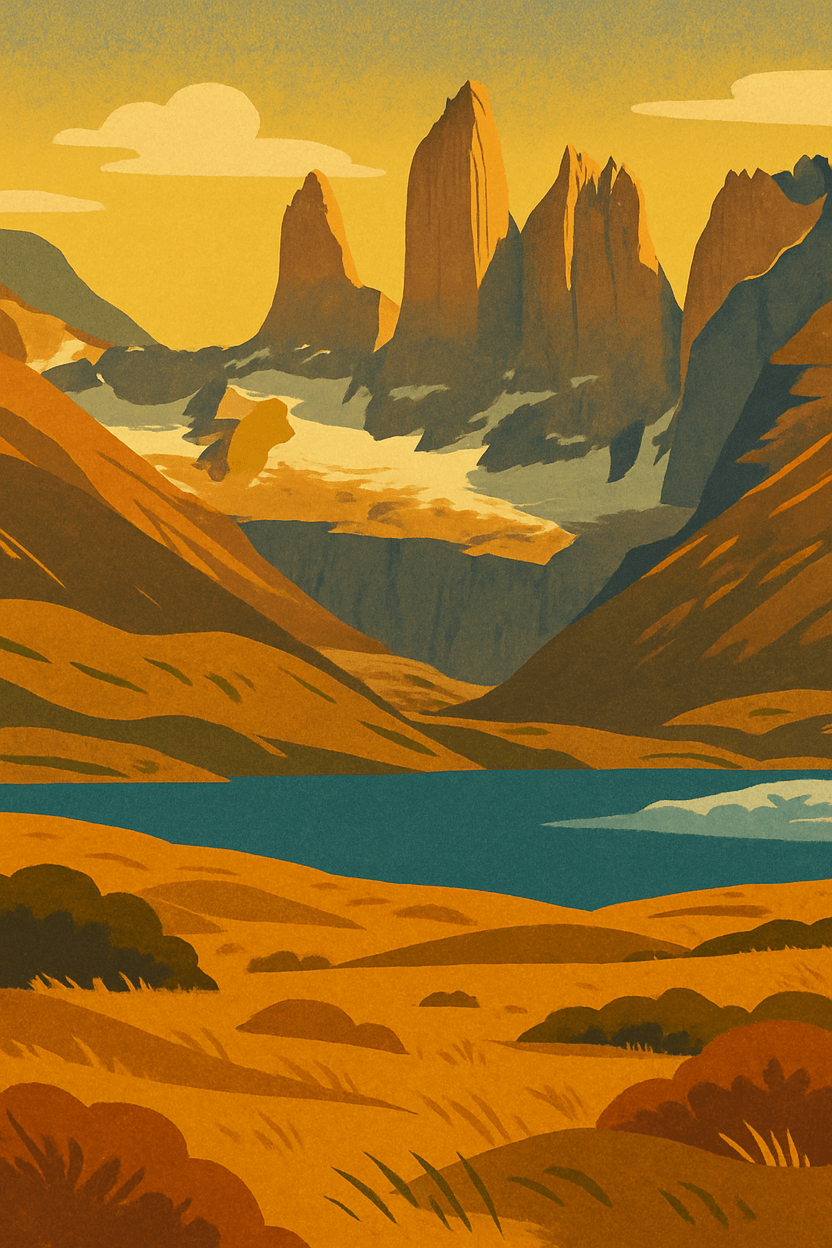
Patagonia (Torres del Paine)
Magallanes, Chilean Patagonia
The granite towers of Torres del Paine over wind-scoured steppe and glaciers — a summer (Dec–Feb) trekking mecca of 17-hour days and ferocious wind, bookended by calmer, golden shoulder seasons and a near-shuttered winter.
The full sheet
lodging $$$ · airfare $$$- Summer peak & long days Dec–Febwarmest, up to 17h daylight, all trails open; refugios/hotels book out 6–12 months ahead and cost most — also the windiest window
- Wind season peaks Nov–Febhazard window — the 'Roaring Forties/Furious Fifties'; gusts can exceed 100 km/h, knock hikers down and cancel catamaran/ferry legs (e.g. to Grey Glacier), worst midday
- O-Circuit season window Nov 1–March 31 only (W-Trek ~Sept/Oct–April)the back (O) circuit is physically closed outside Nov–March; in winter (May–Sept) most trails are guided-only and many refugios/lodges shut
- Shoulder-season sweet spot Oct–Nov & March–Aprilfewer crowds, lower rates, autumn colour (Mar–Apr) or spring (Oct–Nov) — and often LESS wind; the savvy-traveler window
Best overall
December–February (austral summer): warmest, longest days (up to 17h light), all trails/refugios open — but peak crowds and the fiercest wind. Oct–Nov & March–April shoulders are calmer, cheaper and less windy (though colder).
Shoulder
Oct–Nov (spring) and March–April (autumn colours)
Peak
Dec–Feb (summer — warmest, longest days, windiest)
Weather
Sub-polar and famously four-seasons-in-a-day. Summer (Dec–Feb) highs ~52–59°F with relentless wind (often 30–60 mph, gusting 100+); winter (Jun–Aug) highs ~37–46°F. Rain is possible any day, but the defining hazard is WIND, not cold. Highs 37–59°F. Rain: moderate year-round (wetter/snow in winter); wind is the bigger factor.
Getting there & entry
PUQ (Punta Arenas; some summer flights to PNT / Puerto Natales) — 1-stop via Santiago (SCL) + ground transfer (No US nonstop to Patagonia. US nonstops reach Santiago (SCL) only — from Miami & New York (American, LATAM), Atlanta (Delta, LATAM) and Los Angeles (LATAM), ~9–11h; then SCL→Punta Arenas (PUQ) ~3.5h on LATAM/JetSmart, then a ~3h drive to Puerto Natales + ~1.5–2h to the park.)
Transfer: PUQ→Puerto Natales ~3h; Puerto Natales→park entrance ~1.5–2h (semi-paved, scenic) by shared shuttle/bus (Bus Sur) or private transfer · PUQ→Puerto Natales bus ~$8–28; private transfer ~$220 per vehicle
Entry (US): Visa-free for US tourists (no reciprocity fee since 2014); passport 6-mo validity recommended. No required vaccines. Chile has strict agricultural customs — declare all food.
Remote logistics make it pricey: long-haul airfare + a domestic flight + transfers; in-park refugios/hotels and all-inclusive lodges (EcoCamp, Las Torres, Tierra) carry a big premium and book out far ahead.
Lodging for a group
Sleeps-8 depth: thin · one roof: no · peak minimums: lodge programs run 3–7 nights; in-park refugios book by the bed months out; plan 6–12 months ahead for peak
all-inclusive lodge or dome (EcoCamp) · in-park refugios (dorm/shared, basic) · hotels (Lago Grey, Las Torres) · no big single-villa inventory
book by: 6–12 months for Dec–Feb refugios/lodges
Activity windows
- w-trek — ~late Sept/Oct–April (best Nov–March)
- o-circuit — Nov 1–March 31 only
- glacier-cruises — Oct–April (Grey Glacier catamaran; wind-dependent)
- puma-tracking — best in winter/shoulder (Apr–Sept, guided)
- general-sightseeing — Oct–April
Who it's for
- trekkers & hikers
- adventurous couples
- photographers
- wildlife (puma/guanaco) fans
- a relaxed beach/city trip or anyone wind-averse (the wind is relentless)
- toddlers and limited-mobility travelers on the trails
- winter (May–Sept) visitors expecting full access (O-circuit closed, many lodges shut, guided-only)
- last-minute planners (peak refugios/lodges sell out 6–12 months ahead)
pace: high
Group-type fit
| bachelorette | ●●○○○ |
| family | ●●●○○ |
| multigen | ●●●○○ |
| couples | ●●●●○ |
Access & safety
wild trekking terrain — rocky, exposed and steep; even 'easy' days involve uneven trails and wind; non-hikers stick to lodge grounds, viewpoints and boat trips · stroller/wheelchair: very limited on trails; some lodges and viewpoints are accessible
tap water: generally safe — Chilean city tap water is potable; in-park glacial/stream water is widely drunk but purify if unsure · altitude risk: none (the park is low, ~150–3,000 ft on trails) · uv heat: high UV (thin southern ozone) despite cool temps — burns fast; pack for wind/cold/rain in a single day · water safety: glacial lakes/rivers are frigid; boat trips are wind-dependent; hypothermia risk if caught out in weather
from the Wanderer's research files · seasons & events verified against real calendars — the honest weeks included